Table Of Content

So, anything you can do to use fewer chemicals there would probably be prudent. I’d even consider using baby shampoos and cleansing products made for sensitive skin for a while, since they tend to be milder and cause less irritation. Sometimes, hormonal therapy for cancer can cause your hair to thin.
We treat every type of cancer, including the most important one: yours.
If you have questions about your care, contact your healthcare provider.While we read all feedback, we cannot answer any questions. Please do not write your name or any personal information on this feedback form. Wigs may be created from human hair or synthetic materials. Each type has different costs and requires different maintenance. When selecting a wig color, use natural light such as outdoor sunlight or light through a window to better match your hair color. Make sure your wig is adjustable as your head size may measure smaller when you lose your hair.
Tips for Tying a Headscarf
Some people alternate wearing wigs and other head coverings such as scarves. Additionally, some people choose not to cover their head after their hair falls out. Scalp cooling may reduce hair loss by cooling the scalp using a cold cap before, during and after each chemotherapy treatment. Hair loss depends on the type of chemotherapy you receive as well as the dose and schedule of the chemotherapy. You may experience mild hair thinning or complete hair loss. To date, there has been no connection between the amount of hair loss or speed of hair regrowth with a patient’s race, ethnicity or hair type.
10 habits for good health
How I Lost My Hair and Found a Community - ELLE
How I Lost My Hair and Found a Community.
Posted: Wed, 06 Sep 2023 07:00:00 GMT [source]
Some people choose to cut their hair very short or even shave their head before hair starts falling out. If you choose to shave, use an electric razor to avoid cuts. Head coverings such as scarves, hats and wigs are also an option.
'It saved a lot of my hair during chemotherapy' – breast cancer patients praise cooling caps
Planning for hair loss may help you cope with this difficult side effect of treatment. You might not think about how important your hair is until you face losing it. If you have cancer and are about to start chemotherapy, the chance of hair loss is very real. People with cancer report hair loss as one of the side effects they fear most as they face cancer treatment. Doctors often prescribe oral medications to be used along with topical minoxidil because studies show the combination boosts hair production.
Coping With Chemotherapy-Related Hair Loss for People of Color - Everyday Health
Coping With Chemotherapy-Related Hair Loss for People of Color.
Posted: Fri, 05 May 2023 07:00:00 GMT [source]
There can also be other reasons for hair loss or hair changes, such as thyroid problems or low iron levels. Cooling caps may help prevent hair loss due to chemotherapy. A person can speak with a doctor to discuss if a cooling cap could help them. Some studies have shown that cooling caps might not work well on hair with tight curls and coils. Tight curls and coils might prevent the cap from getting the scalp cold enough. Getting the cap to fit close to your head might require changing how you style your hair.
For now, don’t color, perm, or chemically straighten your hair. Don’t use rollers, curling irons, or straightening irons. Use a soft-bristle hairbrush, and instead of using a blow-dryer, let your hair air-dry. Depending on their age, children may be scared or even embarrassed by your hair loss. Let them know what to expect and why your treatment is so important. The more positive you can be, the better they’ll react.
More on Cancer

The most common method people try is a cooling cap, also known as scalp hypothermia. It’s a fitted cap filled with cool liquid that you can wear during treatment. The idea is that it slows down the blood flow to your scalp so the chemo drugs can’t kill those cells. Scalp cooling only blocks certain chemotherapy drugs and doesn't work for everyone.
International Patients
If it is too big you’ll tend to look swamped in it. If it is too small you’ll feel it is quite insecure and you’ll feel like it is slipping off all the time. Something like this would be good because you are looking at... So you need to have something that is going to cover...to the sides and also down to the nape of the neck. And you can see here it has quite pretty detail on this one.
Alkylating agents damage the cell DNA at all phases of the cell growth cycle. They are used to treat many types of cancer, both solid tumors, like lung or breast cancer, and blood cancers, such as leukemia and multiple myeloma. Shorter hair doesn’t lie flat against your head, so it can make your hair look thicker and fuller. (It’s also easier to manage under wigs.) If you choose to shave your head, use an electric shaver or have it done at a barbershop. Your feedback will help us improve the educational information we provide. Your care team cannot see anything you write on this feedback form.
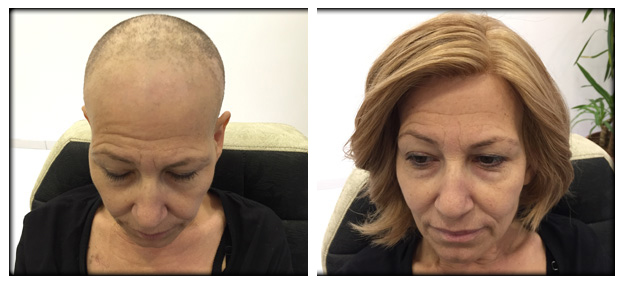
However, it is not recommended for people with leukemia or some other blood-related cancers. However, there is less research about how well scalp cooling works with tightly curled Afro-textured hair. How much hair you lose depends on which chemotherapy you are given and the dose. It also depends on whether you get your chemotherapy as a pill, through an IV, or on the skin. The amount of hair loss also varies from person to person.
Elahere is an antibody–drug conjugate made up of a monoclonal antibody called mirvetuximab attached to a highly potent chemotherapy drug called DM4. After being infused into patients, mirvetuximab seeks out and binds to FR-α on the surface of ovarian cancer cells. The drug is then pulled into the cancer cell where the DM4 is released, killing the cells.
Some people are more comfortable cutting their hair very short before undergoing therapy. This means that hair loss will not seem as dramatic when it happens. While losing your hair may sound like a small price to pay for preventing cancer from coming back, it’s a side effect that’s often hard to take. Not only can losing your hair be tough on your self-image, it’s also a vivid and constant reminder of a cancer diagnosis. We use gender-inclusive language and talk to our readers as ‘you’ so that everyone feels included.
And this lowers the amount of drug reaching the hair follicles on your head. With less of the cancer drugs getting to the hair follicles, the hair is less likely to die off and fall out. Some cancer treatments can make your hair fall out, but wigs, cold caps and other products are available to help you cope.
However, a person’s hair should grow back once they finish their treatment. The number of people who have hair loss due to chemotherapy may vary depending on the type of chemotherapy drug used to treat them. Clinical trials are now evaluating Elahere in people with platinum-sensitive, FR-α-positive ovarian cancer that has returned after earlier treatment.


No comments:
Post a Comment